
The investments of the world’s 125 wealthiest billionaires generate approximately 393,000,000 tonnes of CO₂e annually. | The average portfolio of a single billionaire in this group generates approximately 3,144,000 tonnes of CO₂e annually. |
SYSTEMIC CLIMATE ACTION
The system protects the biggest emitters. Climate and society bear the cost.
World 3.0 is an independent non-profit organization analyzing gaps in global climate regulations. We identify areas that remain beyond effective legal control, measure the true impact of the largest emitters, and develop concrete proposals for legislative change. Our analyses are grounded in scientific data and direct consultations with international experts.
World 3.0 Foundation is a verified non-profit organization (verified by Goodstack)
and a participant in the Google for Nonprofits program.
Registered in the European Commission’s Funding & Tenders Portal, PIC: 864480103
2026
Record of actions World 3.0
- Completed
- In progress
- Scroll for the full year →
Last updated: 14 October 2026
The public is expected to conserve energy, face higher costs, and make personal sacrifices in the name of climate responsibility. At the same time, major emitters continue to exploit exemptions, tax breaks, and legal loopholes shaped by lobbying and political influence. The result? The financial burden of the green transition is shifted onto ordinary people—hitting them through energy bills, product prices, and daily expenses—while the most carbon-intensive sectors continue to evade full accountability.
World 3.0 was established to expose, quantify, and publicize these mechanisms. We operate without funding from the industries we analyze. Free from conflicts of interest. Untouched by lobbyists. Because a truly fair system must begin by holding the biggest polluters accountable—not by offloading the costs onto society.
Climate regulations don’t fail by accident. They are crafted within a system compromised by conflicts of interest.
World 3.0 identifies the legislative process within high-emission sectors as the root cause of climate paralysis. Regulatory failures in areas such as fast fashion, energy, and luxury goods do not stem from technical oversight, but rather from the systemic distortion of expert knowledge by corporate lobbying.
If the advisory sources relied upon by EU institutions are compromised by conflicts of interest, any resulting regulation is inherently flawed. The legislative process must be anchored in independent scientific knowledge as the basis for decision-making, rather than the opaque influence of the entities subject to those very regulations.
That is why our top priority is to overhaul the architecture of lawmaking by implementing three systemic mechanisms:
- Mechanism 1 — Conflict of Interest Verification. A mandatory, public registry of expert funding (covering at least the preceding 5 years)
- Mechanism 2 — Legislative Footprint A transparent record of the lawmaking process, revealing stakeholder influence and every attempt to weaken regulation
- Mechanism 3 — Revolving Door Ban Excluding individuals with direct ties to the regulated sectors from the legislative process

This is our overriding systemic priority. Its implementation may require a lengthy institutional process; however, this does not halt the analytical work conducted by World 3.0 within high-emission sectors. On the contrary—we view these analyses as a parallel tool for identifying legal loopholes, documenting the influence of interest groups, and building pressure to overhaul the legislative architecture.
Lobbying vs. Cost of Climate Regulations
Select a sector to see how much the industry spends annually on lobbying in the EU and how much it would actually cost to implement climate regulations.
The aviation sector is partially exempt from the EU Emissions Trading System (ETS) for intra-EU flights, while intercontinental flights remain outside the scope of CORSIA until 2027. Lobbyists have effectively delayed the expansion of regulations.
Expert Sources of Analysis
World 3.0 materials are grounded in expert interviews conducted with researchers and institutions working on climate policy, emissions, and regulation.
Prof. Stefan Gössling
School of Business and Economics, Linnaeus University
Expert interview — April 2026
International Council on Clean Transportation (ICCT)
Private aviation — expert consultation
Research input: Sola Zheng, Senior Aviation Researcher & Daniel Sitompul, Associate Researcher
Prof. Ingun Grimstad Klepp
Professor of Clothing and Sustainability, Oslo Metropolitan University
Expert interview — June 2026
Equal accountability is the foundation of a stable world.
We analyze gaps in EU law
The system is designed to keep the largest emitters out of sight. We analyze EU regulations and show precisely why they fail.
We develop legal proposals
Diagnosis without proposals is just noise. For every identified gap, we develop a concrete legal proposal — ready to be submitted to EU institutions.
We deliver recommendations
Law changes through organized pressure, not good intentions. We direct our analyses and proposals directly to decision-makers, media, and the public
The investments of the 125 wealthiest billionaires generate approximately 393,000,000 tonnes of CO₂e per year.
That is the equivalent of approximately 140 million years of emissions from an average world citizen.
The loop: Politicians receive funding from emitters → create regulations full of loopholes → communities pay for the damage → the cycle repeats.
Regulation ends where power begins.
- Emissions stemming from the investments of the wealthiest are not required to be fully disclosed.
- The fast fashion industry exports pollution to countries that have no voice in Brussels.
- Agri-food corporations import food produced using methods banned within the EU — with no consequences whatsoever.
- Biomass burned in European power plants is counted as “renewable” — even when it comes from clear-cut forests.
The law must work the same for everyone.
Not only for small businesses and ordinary citizens. But also for corporations that export pollution, billionaires who pay nothing for the emissions generated by their investments, and industries shielded by loopholes in EU law. We design concrete regulations to change that.
This is a fragment of a bigger picture. See the full map of legal gaps. →
“We have a small class of people making very large contributions to climate change – these have a cost that is passed on to all of us, but in particular also the poor. I consider this an issue of climate justice.”
World 3.0 Foundation interview, April 2026. Prof. Stefan Gössling
Extend the ETS to private jets and charter flights
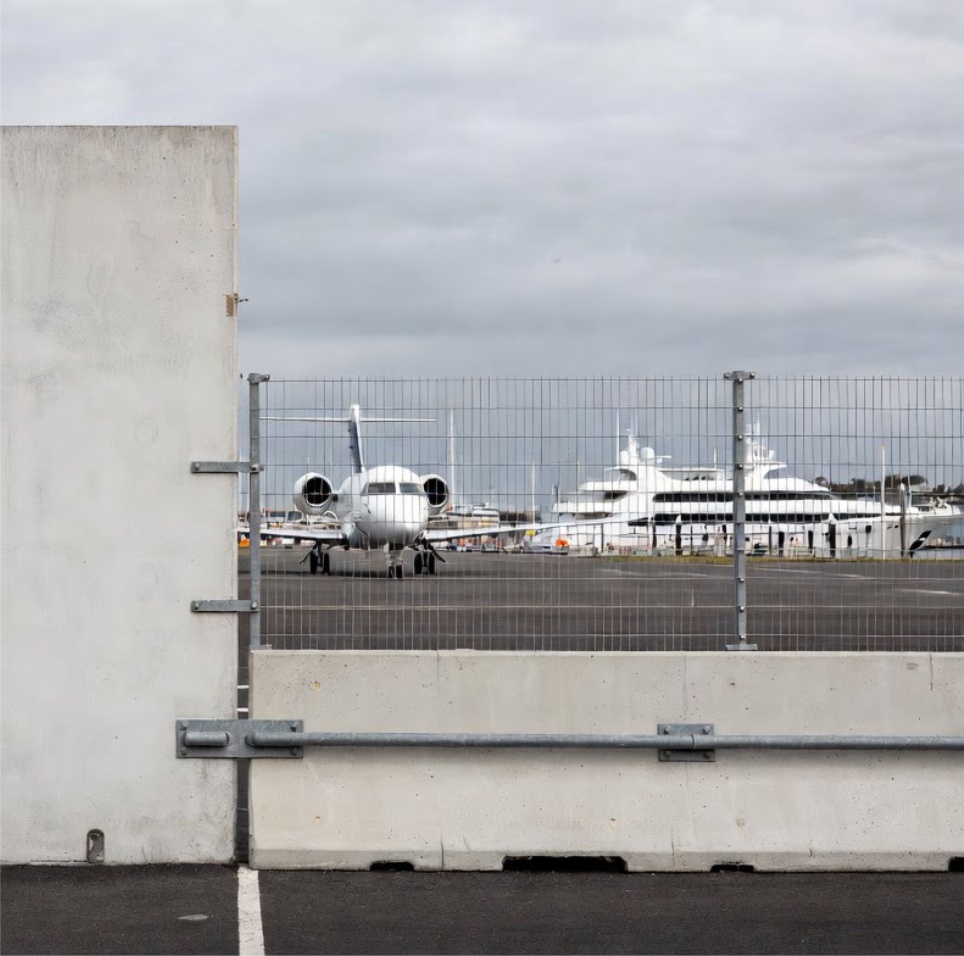
67% of private aviation emissions fall outside the emissions trading system. This is not an oversight — it is a legal construct carefully maintained by industry lobbyists.
Subject superyachts to a comprehensive climate fee system
FuelEU Maritime overlooks the largest private vessels. 300 superyachts emit as much as 60,000 people per year — with no consequences whatsoever.
Mandatory emissions reporting for investment portfolios
The investments of 125 billionaires generate 393 million tonnes of CO₂ per year. Most of this is reported nowhere — because it is not required to be
Supply chain certification in aquaculture
Fish loaded with banned antibiotics reach European shelves. The control system is patchy and ineffective
A ban on the export of pesticides prohibited in the European Union
Pesticides banned in the EU are legally exported to Africa and Asia — and return as residues in imported food
Reclassification of biomass under the RED (Renewable Energy Directive)
Burning wood still counts as renewable energy. RED III changed little — and even those changes have been largely ignored by most EU member states
Impact Partner

Supported by
Our work is supported through non-profit programs and discounts: Google for Nonprofits,
Anthropic (Claude), and Canva.
Join as a Substantive or Institutional Partner
We are looking for substantive and institutional partners, as well as individuals who want to support the development of effective climate regulation.